Tuesday, August 19, 2025

Students with visual impairments

The Nature and Degree of Visual Impairment 


Visual impairment involves significant vision loss in both eyes, not correctable with glasses. It varies in severity ranging from low vision to blindness and requires individual adjustments. Impairments may be congenital (present at birth) or adventitious (develop later). Each child learns differently, as vision may fluctuate with fatigue, glare, or lighting conditions. 

Meet Jewel and see how she navigates life with vision loss


Educational Implications of Vision Loss 


Vision loss affects concept development, communication, life skills, mobility, and academics. Learning often requires more time, and opportunities for self-image, independence, and community living are essential. Teachers should support students by promoting interpersonal skills, independence, and adaptive behaviours, ensuring equal access to intellectual and personal growth opportunities. 

Needs of Students with Visual Impairments 


Students with visual impairments need inclusion, social connections, experiential learning, and opportunities to participate fully in class. They benefit from goal-setting, safe environments, proper lighting, and assistive resources. Support from teachers and peers ensures they feel secure, can move independently, and access the curriculum effectively using appropriate technology. 


Students with Visual Impairments – Expectations 


Students with visual impairments should share equal rights and responsibilities as peers. Expectations include effective communication, independence, adaptability, and self-advocacy. They should develop good interpersonal and academic skills, use residual vision, and plan realistic career paths. Building self-image and using specialized technology helps them achieve success in school and life. 


Why awareness is so important when helping those who are blind!!!


Orientation and Mobility (O&M) 


O&M is the ability to move safely and independently, often taught by specialists. It includes adapting to routine changes, navigating school environments, and being aware of surroundings. The level of O&M training depends on the severity of vision loss, and individualized strategies ensure students manage school life with confidence and safety. 
 

Safety and Environment 


Students with visual impairments face unique challenges in navigating school spaces such as gyms, libraries, labs, or washrooms. Safety planning like fire drills, class transitions, and orientation to “comfort” areas is critical. Ensuring accessibility in all environments, including playgrounds, cafeterias, and bus stops, helps create a safe and supportive school experience. 


Planning

Planning for students with visual impairments involves individualized education plans (IEPs), advance provision of accessible materials (Braille, enlarged print, taped), and organized systems like buddy support. Early preparation of books and handouts is critical. The buddy system allows collaboration, peer support, and ensures equal participation across various classroom activities. 

Instruction 


Instruction should prioritize verbal explanations, as students with visual impairments miss visual cues. Teachers should “talk while teaching,” describe transitions, and announce instructions clearly. Real-life, hands-on examples strengthen learning connections. Additional one-on-one explanations may be required to reinforce concepts and ensure comprehension, promoting tactile, kinesthetic, and experiential learning opportunities. 

Assessment


Assessments for visually impaired students may require extended time, fewer questions, or alternative formats such as verbal responses or scribes. Clear outlines and focused study skills are essential. Teachers should skip unnecessary details, check spelling and vocabulary, and encourage handwriting, while incorporating technology to minimize frustration and fatigue in tasks. 

'Testing accessible products as a blind girl'


The Braille User 


Braille instruction is led by specialist teachers, not general classroom staff. Literacy development follows different pacing for Braille users. Tools like taped books and readers support learning. Assignments often emphasize quality over quantity, with Braillewriters used for written work. Teachers should recognize the additional time required for producing Braille materials.

Aids Your Student May Need 


Students benefit from technological aids such as photocopiers, Braille production, or enlarged print for accessible learning. Paper with darkened lines and books in large print or Braille may be provided. Short readings can be adapted when teachers give notice. 


Equipment 


Equipment includes tilt-top desks (see image below), book stands, and reading markers to optimize vision. Tools like optical enhancers, CCTV magnifiers, and tape recorders assist in enlarging, recording, or reviewing materials. 


Technology 


Technology enhances access for visually impaired students. Devices like Braille ‘n’ Speak (see image below) provide auditory note-taking and playback. Computers allow enlarged text, speech output, or Braille conversion, enabling independent learning. 


Monday, August 11, 2025

Returning to School After a Concussion: A Fact Sheet for School Professional

CHILDREN AND CONCUSSIONS


What role do I play in helping a student return to school after a concussion?

Many K-12 students sustain concussions yearly from various accidents. While most recover quickly, some may continue experiencing symptoms that impact learning and academic performance. School professionals play a key role in managing the return-to-school process, which required understanding the effects of concussions and coordinating support. A collaborative approach-including school staff, students family and healthcare professionals is essential to ensure a smooth recovery and successful reintegration into school. 

How can a concussion affect learning?

The impact of a concussion on a students return-to-school experience varies by individual. While many students may not face limitations, others can have difficulties with participation, learning and school performance. Academic tasks requiring focus can trigger or worsen symptoms. making it important for adjustments to be tailored to each students needs.

When is a student ready to return to school after a concussion?

A student can return to school after a concussion only when cleared by a healthcare professional experienced in concussion evaluation. The decision is based on the type, number and severity of symptom. The healthcare professionals will advice on safe timing and appropriate cognitive and physical activity levels.

CONCUSSION TIPS FOR RECOVERY AT HOME 


Who should be included as part of the team supporting the student?

A collaborative team supports a students returning to school after concussion.

It includes
The student - sharing their symptoms and progress 
Parents/guardians - understanding the condition and following medical guidance 
Other caregivers (coaches, after-school providers) - They monitor participation and observe changes in behaviour.
Physician/other healthcare professionals -  Health care professionals involved in the student’s diagnosis and recovery should provide an individualized plan for a student returning to school to help manage cognitive and physical exertion following a concussion.

Other member of the team can include speech and language therapists, school nurses and school admin. 

How can understanding concussion symptoms help with identifying a students individual needs. 

Understanding concussion symptoms helps school staff identify a students unique needs, monitor changes and take necessary actions with permission The following image provides some insight on what symptoms of a concussion look like. 

This can help support full recovery and prevents students from downplaying symptoms due to embarrassment or pressure. 


What roles do cognitive exertion and rest play in a student’s recovery?

Rest is essential after a concussion to allow the brain to heal. Excessive cognition exertion, like studying intensely, can worsen symptoms and delay recovery. School should limit mental activity to tolerate levels and include cognitive rest breaks to prevent symptom reemergence and support a students gradual return to learning.

It is vital to rest in the correct way - the image below shows how implement recovery correctly when a student has a concussion.


How can I help identify problems and needs?

Identifying problems and needs involves recognizing a student’s symptoms and factors that worsen them, such as specific tasks, times of day, or environmental triggers. Tailored interventions can then be applied. Recovery may take longer for students with prior concussions, medical conditions, or developmental disorders, and can be impacted by anxiety or depression


When symptoms persist: What types of formal support services are available?

For most students, only temporary, informal, academic adjustments are needed as they recover from a concussion, However, a variety of formal support services may be available to assist a student who is experiencing a prolonged recovery.  Some of these support services include... 

Response to intervention protocol  (RTI) - Multi-step approach to track progress and adjust instruction/support as needed

504 PLAN - Modification/adaptations to help return to pre-injury performances (e.g environmental changes, curriculum)

INDIVIDUAL EDUCATION PLAN - For students with disabilities significantly impacting learning, this provides support and accommodations.  


Thursday, July 17, 2025

Language development throughout the ages.

 8-18 Months 


The following video explains how expressive language typically develops by around 18 months of age. It highlights how toddlers begin to use simple words to name familiar people, objects and needs. At this stage, children may say 10-50 words and start combining two-word phrases like "more juice" or "daddy go." This video emphasizes the importance of responsive interactions-talking, singing and reading, to encourage language growth. Its aimed at helping parents and educators understand milestones and support early communication through everyday routines and meaningful engagement.

18-36 Months


This video explores how children's expressive language grows rapidly between 18-36 months. During this stage, toddlers being to use longer phrases and simple sentences such as "i want more" or "Mommy go work." Their vocabulary expands to 200+ words and they start naming objects, asking questions and using pronouns like "me" and "you." This  video emphasizes how rich verbal interactions such as story telling and play are, they all support development.   

36-48 MONTHS


This video explains how children’s expressive language becomes more advanced between 36 and 48 months (ages 3–4). At this stage, children begin using full sentences, tell simple stories, ask lots of “why” and “how” questions, and use language to express emotions, ideas, and solve problems. Their vocabulary grows rapidly, often exceeding 1,000 words. The video encourages parents and educators to engage children in back and forth conversations, support storytelling, and introduce new vocabulary through books and play. Emphasis is placed on giving children time to talk, listening patiently, and expanding their ideas to build strong foundations for reading, writing, and social communication.


48-60 MONTHS


Between ages 48-60 months, children become confident communicators. This video highlights how they use complex sentences, tell longer stories with beginnings, middles, and ends, and understand conversational rules like taking turns and staying on topic. They ask thoughtful questions, explain ideas, and start using language to reason, persuade, and solve problems. The video encourages adults to enhance this development by engaging in rich, open-ended conversations, encouraging storytelling, and introducing new vocabulary through books, real-world experiences, and imaginative play. Supporting language in this stage helps prepare children for success in school and strengthens both literacy and social skills.


Semantic and Pragmatic Influence on Syntactic Development

Language development is interconnected with aspects like semantics, syntax and pragmatics influencing each other. This post will explore how semantics and pragmatics shape syntactic development. Furthermore, expressive language use enhances vocabulary growth in preschoolers as children build their lexicon by seeking words to express their thoughts.

SEMANTICS
 Semantics refers to the meaning behind words and sentences. Its how children understand and use vocabulary to convey ideas. In early development, as children begin to express themselves, they must grasp not just what words sound like but what they mean. For example, children learn the difference between 'mummy', 'run', 'walk'. Semantics play a critical role in syntax development because it helps children understand how words fit together to form logical, meaningful sentences.  


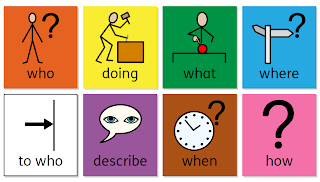
The photo above is an example of how semantics and colour are taught hand in hand. Colourful semantics is a visual and structured approach to developing children's sentence building and language skills. It uses colour coded cards as who (orange), doing (yellow), what (green) and where (blue) help children understand sentence structure and meaning. This is originally designed for children with speech and language difficulties. It supports story telling, grammar and vocabulary in an enabling and accessible way.  


PRAGMATICS


To expand further on the image above, pragmatics is all about how we use language in real-life situations, its how we choose our words based on what we want to say, who we are talking to and what we think they already know. For example, 'car' means its new information, while 'the car' infers its a subject that has already been talked about.

Pre schoolers don't think about grammar the way adults do. Instead, they learn through experience and by watching others speak. For example if an adult says to a child 'look at dax', the child might guess 'dax' as a thing, probably a noun. Over time, they start to understand how to use language to get their point across. 

Overall, pragmatics teaches kids how to use language politely, clearly and effectively in different situations, it also develops naturally through social connection and everyday interactions. 

The video above discusses pragmatics and social skills and why the two must interconnect in order to enhance a childs language development. 


Language Development Differences and Delays


Language develops differently for every child. Around 10-15% are late talkers, with some catching up and others experiencing long-term language impairments. Development is influenced by genetic, environmental and social factors. Bilingualism and dialectal differences are normal variations, not disorders, cultural context plays a big role in shaping language growth. 

HOW TO APPRAOCH LANGUAGE DELAYS IN CHILDREN WITH AUTISM

In the following video Dr Mary Barbera shares practical tips for supporting language development in children with autism. She emphasizes the importance of avoiding common mistakes when teaching toddlers to talk, especially focusing on early intervention. 

Referencing behaviourists like Roger Brown and B.F. Skinner, she stressed the value of understanding how children learn language through interaction and reinforcement. The video is aimed at parents, educators and professionals working with autistic children, offering a clear, research based approach to improving language skills in meaningful and structured ways.

SIMULTANEOUS ACQUISTION 

Simultaneous acquisition refers to when a child learns two or more languages at the same time, typically from birth to around age three. This usually occurs in bilingual households where each language is regularly used. According to Genesee (2001) children are capable of developing two distinct language systems without confusion. While bilingual children may have smaller vocabulary in language individually at first, their total vocabulary often matches or exceeds that of monolingual peers over time. 


Research by De Houwer (2009) supports this, showing that consistent exposure and interaction in both languages are essential for success. Children benefit most when both languages are used naturally in daily life. This can be done through play, story telling and conversation. Code-switching (switching between languages) is a normal part of development and shows language flexibility, not confusion.  

LANGUAGE DEVELOPMENT DELAYS/SYMPTOMS 

Language delay means a child isn't meeting typical speech and language milestones. Symptoms include not babbling by 15 months, not speaking by age 2, or not forming short sentences by age 3. Other signs are difficulty following directions, poor pronunciation, trouble putting words into sentences and leaving words out of speaking. The delays can be expressive (trouble speaking), receptive (trouble understanding), or both. This varies based on the child's age and development.   

CORRELATION IN HOMELESSNESS AND LANGUAGE DELAYS 

Low socioeconomic status (SES) and homelessness can negatively impact children's development. Poverty affects millions, especially those in African American, Latino and Native American populations. SES is shaped by family income, education and occupation, all of which influence what kind of languages children are exposed to. Parents with a better quality education tend to use richer language, while those with SES status have fewer verbal interactions due to stress and material hardships. These challenges can delay language growth.


Wednesday, July 9, 2025

Touch Maths

INTRODUCTION 

Touch Math is a hands-on, multisensory approach designed to help students understand number value and basic maths concepts. It's especially helpful for learners who struggle with traditional methods, including those with dyscalculia, autism or ADHD. Each numbers from 1-9 has 'TouchPoints' placed on or around it - these are small dots that students can  physically count as they learn. It makes maths more visual, tactile and accessible. This helps boost confidence and understanding

TOUCHPOINTS


STRATEGIES FOR SIX LESSONS

  1. Introducing TouchPoints - Start by showing students where the dots are placed on each number. Practice counting them aloud and pointing as they go.
  2. Single-Digit Addition - Use flash cards or worksheets with numbers and TouchPoints. Have students count the dots on both numbers to find the total. 
  3. Subtraction Practice - Use real objects and Touch Maths numbers to 'take away' TouchPoints and visually show what subtractions looks like.
  4. Number Recognition Game - Mix visuals and movement - like hopping the number of TouchPoints shown or clapping to match the dots.
  5. Word Problems with Touch - Read simple problems aloud and let students use TouchPoints to solve them step-by-step.
  6. Independent Practice Sheets - Use repetition and guided practice. Let students trace, count and write the numbers using TouchPoints.
WHO IS TOUCH MATHS FOR?


TIPS ON USING THE COURSE
  • Start slow and make sure students really under the concept of TouchPoints before moving on.
  • Keep it fun and interactive.
  • Be consistent
  • Use real word connections like counting snacks, steps or toys.
  • Encourage the students to say the numbers out loud.
  • Always give lots of praise

TOUCH MATHS TOUCHING/COUNTING PATTERNS


SUMMARY

Touch Math takes something that can feel really overwhelming, like numbers and breaks it down into something kids can physically interact with. Its a great reminder that not everyone learns the same way. As someone training to be an EA, I love that this method gives students something solid to work with while building their skills and confidence. 

The Orton Gillingham Approach

INTRODUCTION

The Orton Gillingham approach is a structured and, multisensory and evidence based way of teaching reading, writing and spelling. Originally designed for students with dyslexia, it has become widely respected for its effectiveness in supporting all types of learners who struggle with literacy. What makes it stand out is how it combines visual, auditory and kinesthetic learning strategies in a very intentional and repetitive way, ensuring students can build skills at their own pace. 


7 KEY STRATEGIES

  • Multisensory instruction - Students use sight, sound, touch and movement when learning new content.
  • Explicit Teaching - Every concept is taught clearly and directly, with no assumptions made about prior knowledge.
  • Sequential and Cumulative learning - Lessons follow a logical order, building from simple to complex, with review built in.
  • Diagnostic and Prescriptive - Instruction is based on ongoing assessment and is tailored to each students needs.
  • Language-Based - Students learn structure of the language, including phonology, morphology and syntax.
  • Repetition and Reinforcement - Frequent review helps solidify concepts and prevent regression.
  • Emotionally Safe Learning Environment - The approach helps build confidence and reduce anxiety in struggling learners.


TIPS ON USING THE COURSE

  • Be consistent with daily practice, even if sessions are short.
  • Use multisensory tools like sandpaper letters, whiteboards and movement board games.
  • Celebrate small wins to boost confidence.
  • Don't rush - this approach works best when students feel safe and supported.
  • Keep notes on what works for each students and adjust strategies when needed.
  • Practice patience - progress may seem slow at first, but it helps build a strong foundation. 

THE ORTON GILLINGHAM LESSON


SUMMARY

The Orton Gillingham approach isnt just a teaching method, its a mindset shift. It shows that with the right strategies and support, all students can learn to read. For an EA , like myself, this approach reinforces the importance of being observant, adaptable and encouraging. It's not about racing ahead, its about walking alongside the learner until they feel confident taking the next step. 

Ludwig van Beethoven

Who is this person? Ludwig van Beethoven was a German composer and pianist born in 1770. He is one of the most influential musicians in hist...